

Studying in Denmark in 2026: The Education System, Top Universities, Admission, and Costs
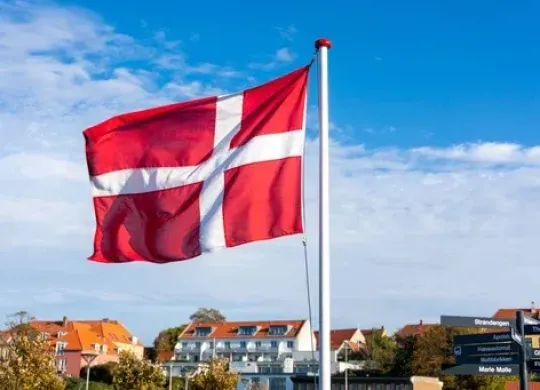
The Danish higher education system is among the best in Europe, and the country’s eight public universities admit tens of thousands of international students to English-language programs each year. Tuition costs, deadlines on Optagelse.dk, and SIRI’s requirements for residence permits are updated regularly, so it’s important to have the most current figures and list before submitting your application. Learn more about the education system in Denmark, the best universities, the admissions process, tuition costs, and how to apply for a residence permit in 2026
Denmark is one of the most attractive countries in Europe for pursuing higher education. The country’s public institutions offer internationally recognized programs that meet the standards of the Bologna Process, and more than 600 courses are taught in English.
The unique features of the Danish education system, the top universities, the admission process, tuition costs, and residence permit requirements are covered below.
Are you planning to apply to a Danish university but unsure about the list of required documents or SIRI’s requirements?
The education and immigration lawyers at Visit World will verify that your high school diploma or degree meets Danish standards, prepare official translations, and assist you with the residence permit application process.

The Higher Education System in Denmark: Levels and Structure
Danish higher education follows the three-cycle model of the Bologna Process, and the course load is measured in ECTS credits: 60 ECTS credits are equivalent to one year of full-time study.
Main levels of education:
- Bachelor’s degree (bachelorgrad) — 3 years, 180 ECTS. The degree awarded is a Bachelor of Arts (BA) or Bachelor of Science (BSc).
- Master’s degree (kandidatgrad) — traditionally 2 years (120 ECTS). Some programs, such as medicine, last 3 years. Starting in 2026, new master’s programs worth 75 ECTS (1.25 years) will be gradually introduced.
- Doctoral degree (ph.d.-grad) — 3 years, 180 ECTS. The standard admission requirement is a master’s degree.
Higher education in the country is offered at state universities, university colleges, business academies, schools of architecture and the arts, and maritime educational institutions. The academic core of the system consists of eight state universities.
Read this article to learn about studying in English abroad and the world’s leading universities for international students in 2026.
The Best Universities in Denmark
Danish universities consistently rank highly in the QS and Times Higher Education rankings. The most popular institutions among international students are:
- University of Copenhagen (Københavns Universitet, KU)—founded in 1479, it is the country’s oldest and largest institution. Strengths: medicine, life sciences, law, humanities, and social sciences.
- Aarhus University (Aarhus Universitet, AU)—the second-largest and second-highest-ranked university, founded in 1928. It offers programs in the arts, business, healthcare, natural sciences, and engineering.
- Technical University of Denmark (Danmarks Tekniske Universitet, DTU)—one of Europe’s leading technical universities. Areas of strength: all fields of engineering, sustainable development, and wind energy.
- Copenhagen Business School (CBS)—one of Europe’s largest business schools, offering programs in economics, finance, management, and marketing.
- The University of Southern Denmark (Syddansk Universitet, SDU) has campuses in Odense, Sønderborg, Kolding, Esbjerg, and Copenhagen. It is known for its programs in robotics and healthcare.
- Aalborg University (Aalborg Universitet, AAU)—is recognized for its problem-based learning (PBL) methodology and strong engineering and IT programs.
- Copenhagen IT University (ITU)—is a specialized institution in the fields of computer science, software development, and digital design.
For detailed information on free and affordable education in Europe in 2026 — click here.
Tuition Costs for International Students in Denmark
Education at Denmark’s public universities is free for citizens of EU, EEA, and Swiss countries. This applies to both bachelor’s and master’s programs.
For students from countries outside the EU/EEA, the approximate cost per academic year is:
- Humanities and social sciences: DKK 45,000–75,000 (€6,000–10,000)
- Engineering, IT, and natural sciences: DKK 75,000–110,000 (€10,000–14,700)
- Business programs (CBS and others): DKK 90,000–120,000 (€12,000–16,100)
- Specialized and laboratory programs: up to DKK 120,000 per year
Private institutions charge higher tuition fees—€8,000–20,000 per year. Most universities also charge a small application fee—approximately DKK 750 (€100) for students from outside the EU/EEA. Doctoral programs are usually free: doctoral students receive a scholarship from the university or a paid research position.
The cost of living for international students is approximately DKK 10,000–12,000 per month (€1,300–1,600), including rent, food, transportation, and insurance. Odense and Aalborg are significantly more affordable compared to Copenhagen and Aarhus.
Visit World services for tourists, migrants, and expats: Insurance | Guides | Legal advice
How do I apply to a Danish university?
Admission to bachelor’s programs is coordinated centrally through the national portal www.optagelse.dk. Applicants may select up to 8 programs simultaneously, ranking them by priority; the Coordinated Admission System (KOT) ensures that students receive no more than one offer—for their highest-ranked choice.
Key deadlines for international applicants:
- January 15 — the standard deadline for many programs for applicants from countries outside the EU/EEA (due to the time required to process a residence permit).
- March 15, 12:00 p.m. (CET)—the main deadline for applicants with an international high school diploma or an IB diploma.
- July 5, 12:00 p.m. (CET)—the deadline for applicants with a Danish high school diploma or for submitting additional documents.
- July 28—publication of admission results.
Admission to master’s programs is handled directly through the universities’ websites. Each institution sets its own deadlines: the first application round is in February–March, and the second is in September–October.
The standard application package for international applicants includes a high school diploma with a transcript (for bachelor’s programs) or a bachelor’s degree with an academic transcript (for master’s programs), proof of English proficiency (IELTS Academic 6.5 or higher, TOEFL iBT, or equivalent), a statement of purpose, a resume (CV), and a copy of your international passport. All documents not in English, Danish, Norwegian, or German must be officially translated—uncertified translations are not accepted.
For programs taught in Danish, you must take the “Studieprøven i dansk som andetsprog”—a nationally recognized Danish language exam for non-native speakers.
About the top scholarships for studying abroad in 2026—read more at the link.
Residence Permit for Studying in Denmark
Denmark does not have a separate “student visa” in the traditional sense. Students from countries outside the EU/EEA must apply for a residence permit for the purpose of study, which is issued by SIRI—the Danish Agency for International Recruitment and Integration.
Application process:
- Register for a Case Order ID on the New to Denmark portal (nyidanmark.dk).
- Pay the fee—in 2026, it is DKK 2,255. Payment and submission of the application must occur within the same calendar year.
- Filling out the ST1 form: The first part is completed by the university; the second part is completed by the applicant after receiving a link via email.
- Submit biometric data (fingerprints, photograph, signature) at a Danish diplomatic mission or visa center within 14 days of submitting the application.
- Waiting for a decision—the standard processing time is about 2 months.
The permit is issued for the entire duration of study: 3 years for a bachelor’s degree and 2 years for a master’s degree. Upon graduation, the student receives a 6-month or 3-year work-search permit, depending on the type of program.
The standard application package for SIRI includes a copy of all pages of the applicant’s international passport, a letter of admission, proof of payment for the first semester (for tuition-based programs), a bank statement, health insurance, and official translations of documents.
Financial requirements for 2026: Applicants must confirm they have at least DKK 7,426 per month (approximately €950). For programs lasting more than one year, it is sufficient to confirm funding for 12 months—a maximum of DKK 89,112. The funds must be in the applicant’s own account; SIRI does not accept parents’ bank statements or letters of financial support.
International students in state-accredited programs are allowed to work up to 90 hours per month from September through May and full-time in June–August.
About higher education in Europe after age 35—read more here.
Get expert support from Visit World!
Admission to a Danish university involves working with two separate systems—Optagelse.dk on the universities’ side and the SIRI portal on the immigration service’s side. A mistake with dates, an incorrect translation, or an improperly prepared proof of funding can lead to a rejection or the loss of an entire academic year. Visit World’s lawyers specializing in education and immigration will help verify that your high school diploma or degree meets Danish requirements, prepare official translations of your documents, assist with submitting your application on Optagelse.dk and applying for a residence permit through SIRI, and advise you on current changes to Danish education law.
Schedule a consultation with an education lawyer on the Visit World portal—this will save you time and minimize the risk of being denied admission or a residence permit.
Reminder! In our previous article, we discussed the Top 10 Universities in Europe for 2026.
Photo: Magnific
Products from Visit World for a comfortable trip:
Checklist for obtaining a visa and necessary documents in Denmark;
Legal advice on immigration to Denmark;
Travel insurance for foreigners in Denmark;
Medical insurance all over the world.
We monitor the accuracy and relevance of our information. Therefore, if you see any error or discrepancy, please write to our hotline.
Frequantly
asked questions
How much will it cost for international students to study in Denmark in 2026?
Is it possible to study for free in Denmark?
Recommended articles
2 min
Education
Poland Changes University Admission Rules in 2026: New Opportunities for International Students
Poland is preparing major changes to the university admission system in 2026. Find out how the new rules will affect international students, what will change in the admission campaign and how to prepare for studying in Poland
18 Jun. 2026
More details2 min
Education
Australia Student Visa Cost Reaches Record 2000 AUD in 2026: New Rules for International Students
Australia has tightened rules for international students in 2026, raising the cost of a student visa to a record AUD 2000. Find out how entry requirements, application requirements and post-study employment opportunities have changed
24 Jun. 2026
More details2 min
Education
US Ends Duration of Status for F, J, and I Visas: What Changes for Students in 2026
The United States of America is abolishing the “Duration of Status” system for student and exchange visas – find out what new restrictions await F, J and I visa holders, how the status extension procedure will change and what you need to do now
02 Jul. 2026
More details3 min
Education
Studying in English Abroad: The World's Leading Universities for International Students in 2026
Every year, leading universities in Europe, Asia, Australia, and Africa expand the range of English-language bachelor’s and master’s programs available to international applicants. These programs allow students to earn an internationally recognized degree in countries with moderate tuition costs and a strong academic foundation. Learn more about the world’s top ten institutions offering English-language programs for the 2026 admissions cycle
06 Jul. 2026
More detailsAll materials and articles are owned by VisitWorld.Today and are protected by international intellectual property regulations. When using materials, approval from VisitWorld.Today is required.