

Education in Belgium 2026: Schools, Universities and Student Visa Guide
Table of contents
- How is the school education system in Belgium organized?
- Primary and secondary education: what to expect?
- Higher education: why Belgium is underrated by international students
- Step-by-step procedure for obtaining a student visa in Belgium
- How much does higher education cost in Belgium?
- Scholarships for International Students in Belgium
- Prospects for international students in Belgium
- Advantages of studying in Belgium
- Who is Belgium best suited for?
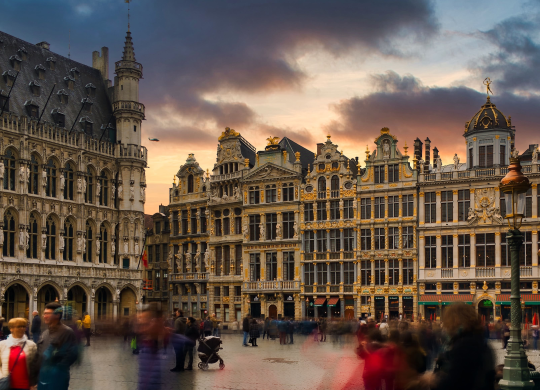
The Belgian education system combines free schooling with strict university admissions rules. Find out how education in Belgium will be organized in 2026, how much tuition costs, and what new requirements apply to obtain a D-type student visa

Belgium rarely makes it to the top of the list of “where to study” rankings, and this is perhaps the biggest injustice among European educational destinations. While Germany attracts with its free education and the Netherlands with its English-language programs, Belgium quietly offers a combination that is difficult to find elsewhere: affordable world-class education in Belgium, three linguistic communities with their own education systems and the headquarters of the European Union literally outside the window of your student dormitory. If you are considering moving with a school-age child or planning your own study abroad, it is worth understanding how the education system of this country works from the inside - and this is what we will discuss below.
Also read how to apply for a work permit in Belgium in 2026.
Studying abroad is not only about admission and documents, but also a bunch of legal nuances in which it is easy to get confused: from academic differences to conflicts at the educational institution.
A Visit World education lawyer will help you choose a country and program, prepare a full package of documents for consultation, and tell you what to do in an emergency. This is especially important now, when the requirements for student visas in Belgium have become stricter. Entrust the formalities to a specialist - and focus on your studies. Find your education lawyer at Visit World today.

How is the school education system in Belgium organized?
The country is divided into three language communities - Dutch-speaking, French-speaking, and German-speaking, and each of them independently determines the rules for enrollment and curricula. The compulsory school age is the same throughout Belgium: from six to eighteen years, and it is divided into primary education (6–12 years) and secondary education (12–18 years). Before this age, free preschools are available to children from 2.5 years old, and, remarkably, over 90% of Belgian children attend them – not because it is mandatory, but because play-based learning prepares children well for school, both intellectually and socially.
There are four types of educational institutions in each region:
- State schools, which are religiously neutral;
- Subsidized state schools, which are organized by municipalities;
- Subsidized private schools, which include many institutions with a religious affiliation;
- Fully fee-paying private schools, which include international institutions and Montessori schools.
You must register your child within the first 60 days of registering with the municipality, and this will require proof of identity, a residence permit (if applicable), vaccination details, proof of address and previous academic documents. An important caveat: children without official residence status still have the legal right to go to school – regardless of their parents’ immigration status.
Since Belgian schools are not based on territorial affiliation, parents can choose their school of their choice, although popular schools near city centers are often overcrowded. The testing system here is also worth understanding in advance: children are assessed at each stage of their education, and repeating a year is a common practice that carries no stigma, unlike in many other countries.
Visit World services for tourists, migrants, and expats: Insurance | Guides | Legal advice
Primary and secondary education: what to expect?
Primary school in Belgium is free for everyone, with the exception of educational materials and excursions. Morning classes are usually devoted to literacy and math, while the afternoons are devoted to music, history and other subjects, with Wednesday afternoons often being free. Foreign languages are taught seriously here: in the upper grades of primary school, learning Dutch or German for the French-speaking community (and vice versa - French for the Dutch-speaking community) usually becomes mandatory.
Secondary education covers the ages of 12 to 18, and after 16, students can switch to part-time studies, combining it with vocational training. When students start to specialize, their path branches into four directions:
- General education, oriented towards further education in higher education;
- Technical education with a practical focus;
- Vocational and technical training, which provides direct access to a profession;
- Artistic education for those aspiring to creative professions.
The completion of secondary school is confirmed by a diploma (Diploma van Secundair Onderwijs or CESS, depending on the language community), which opens access to higher education - although vocational students sometimes need an additional year of study to obtain the full certificate.
Expat parents often choose international schools that follow the British, American or European curriculum, including institutions with the International Baccalaureate (IB). There are also alternatives – Montessori and Steiner schools, as well as support for children with special educational needs, which is coordinated in each community by specialized centers of psychological and pedagogical assistance. Homeschooling is also allowed in the country, although it is accompanied by annual inspections and fairly strict requirements for the program.
Higher education: why Belgium is underrated by international students
If the school system in Belgium is primarily a matter of logistics for families with children, then higher education is a separate story that deserves the attention of independent applicants.
Over 52,000 international students study in the country, and seven Belgian universities are included in the QS World Ranking 2026. Leading the way is KU Leuven, ranked 70th in the world and one of Europe’s oldest and most respected research universities, followed by Ghent University (171st), Vrije Universiteit Brussel (286th), UCLouvain (294th) and ULB (296th).
Each of these institutions operates predominantly in one of the working languages – Dutch or French – at undergraduate level, but for master’s and doctoral programmes, particularly in STEM, business, law and social sciences, English has long been the norm: in total, over 1,500 programmes are offered in English across the country.
The top ten institutions in the world with English-language programmes relevant for entry in 2026 are here.
Step-by-step procedure for obtaining a student visa in Belgium
Students from non-EU countries who plan to stay in Belgium for more than 90 days need a long-term visa type D. The process consists of several consecutive stages, and missing any of them can significantly delay departure.
Step 1. Obtaining a letter of enrollment. Before applying for a visa, you must have an official confirmation of enrollment from a Belgian educational institution - without it, the consulate will not consider the application.
Step 2. Collecting a package of documents. The standard package includes a passport, a completed visa application form, confirmation of enrollment, a document proving financial capacity (the recommended minimum is 800-900 euros per month, the exact amount depends on the commune), a health insurance policy valid in Belgium, and a certificate of no criminal record. Some communes also require confirmation of housing for the first period of stay.
Find the top 10 best universities in Europe in 2026 in this article.
Step 3. Submitting an application to the consulate or embassy. The application is submitted to the Belgian consulate at the place of permanent residence. The standard processing time is 4–8 weeks, so it is recommended to submit documents two to three months before the planned departure - especially if the admission falls on peak months, when the load on the consulates increases.
Step 4. Entry and registration at the place of residence. After receiving a visa and arriving in Belgium, the student must register with the local municipality (commune) at the actual address of residence within the established period.
Step 5. Registration of a residence permit. After registration, the commune issues a residence permit, which confirms the legal status of the student for the entire period of study. It is this document, and not the visa itself, that is the main confirmation of the right to stay in the country.
During your studies, the permit allows you to work up to 20 hours per week during the semester and full-time during the holidays. And after completing the program, you can apply for an orientation permit for a period of 12 months - the main thing is to do this before the expiration of your current student permit, as the deadline for applying is 15 days before its expiration. Missing this window means losing your legal basis for staying in the country, so it is worth starting the process immediately after receiving your diploma, without waiting until the last week.
How much does higher education cost in Belgium?
The financial side of the issue also works in Belgium's favor. Annual tuition fees for non-EU students start at 1,200 euros and can reach 8,000 euros depending on the program - amounts that look modest compared to the cost of a similar education in the UK or the USA.
Master's programs at business schools cost more, in the range of 10,000-25,000 euros.
Vlerick Business School, with campuses in Ghent and Leuven, deserves special mention - it is one of the few schools in the world with triple accreditation by AACSB, EQUIS and AMBA. The cost of living is also noticeably lower than the European average: Leuven and Ghent offer the best ratio of quality of education and affordable living, while Brussels, although the most expensive, compensates for this with the widest career opportunities.
We have previously discussed which countries are the best for living and studying abroad.
Scholarships for International Students in Belgium
The issue of funding is often the first thing that stops applicants from applying to Belgian universities, although in fact the country offers one of the most extensive scholarship support packages in Europe, especially for students from developing countries.
The most advantageous are the VLIR-UOS scholarships for Flemish master's programs. They cover the full cost of tuition, a monthly living allowance and even a travel grant - that is, the student practically does not have to look for additional funding. The mirror analogue in the French-speaking part of the country is the ARES scholarships, which also fully finance tuition, accommodation and insurance for applicants who meet the requirements of Wallonia programs.
If full funding is not required, but rather a reduction in tuition fees is required, it is worth considering the Master Mind scholarship from the Government of Flanders - it is available to outstanding international master's students and can cover up to 8,000 euros per year. Individual universities have their own programs: KU Leuven offers a Science@Leuven grant of 9,000 euros for science students, Ghent University funds doctoral research through its own research programs, and VUB offers partial tuition fee reductions based on academic performance. Students participating in exchange programs can additionally benefit from Erasmus+ travel and study grants.
The main rule here is not to procrastinate. The application deadlines for the most financially advantageous programs, such as VLIR-UOS and ARES, usually fall in November-January of the previous academic year, so it is worth exploring options at least six to eight months before your planned enrollment. If your country is on the list of countries that meet the requirements of these two programs, it is worth starting your search for funding there - and only then consider university or private alternatives.
Prospects for international students in Belgium
A separate argument in favor of studying in Belgium is Brussels' status as the de facto capital of Europe. The city is home to the European Commission, the European Parliament, the Council of the EU and NATO headquarters, along with over a thousand international organisations and think tanks. For students of international relations, law or public policy, this means access to real-life internships in EU institutions while still studying, including the competitive Blue Book Traineeship programme.
Advantages of studying in Belgium
The main advantage, which is rarely mentioned directly, is multilingualism as a tool for career growth. The country has three official languages, and Brussels is formally bilingual, with English as the de facto working language of the international environment. Living and studying here naturally creates a multilingual experience that a monolingual educational environment simply cannot provide.
The second advantage is the compactness of the country. Belgium is about the size of Wales, and Ghent, Brussels, Antwerp, Leuven and Liège are connected by high-speed trains so that the journey between them takes less than an hour. In practice, this means that you can live in Ghent, study there, and do an internship in Brussels three times a week - without moving and without interrupting your curriculum.
The third advantage is the geographical location in the heart of the Schengen area. Paris is an hour and a half by Thalys, Amsterdam is two hours, London is two and a half by Eurostar, Frankfurt is three. No other European country is so closely integrated into the continent's high-speed rail network, and a D-type student visa gives you immediate access to all 26 Schengen countries.
The cultural component should not be underestimated either: Belgium's contribution to art, architecture, comics and gastronomy is disproportionately large for its size, and the quality of daily life in Ghent or Bruges remains one of the highest in Europe. And, of course, the key practical advantage is access to the EU institutions: Blue Book Traineeship or Schuman internships at the European Commission and Parliament are actually available to students from Belgian universities precisely because they are physically based in Brussels - this gives them an advantage in networking and getting to know the institutional environment even before applying for an internship.
Who is Belgium best suited for?
Belgium is particularly suitable for those aiming for a career in EU institutions, international law or public policy – no other country offers such direct access to internships during their studies. It is also suitable for researchers in the natural and technical sciences who are looking for a quality education without British or American prices, and for those who are willing to study Dutch or French in parallel with their main program, significantly expanding local career prospects. However, if a longer period of job search after graduation is a priority, it is also worth considering Australia or the UK, which offer two to three years on a post-study visa instead of the Belgian one year.
When preparing to study in Belgium, it is easy to underestimate how many formalities stand between the acceptance letter and the actual start of classes. Increased financial requirements, increasing visa fees, precise deadlines for submitting documents to the commune – all this must be managed and not missed.
Visit World's educational lawyer accompanies you all the way: from choosing an educational institution and program to preparing a full package of documents for a type D student visa. If there is an academic difference, a conflict with the institution or if representation in court is required - the specialist will take on these issues. This is especially important for students who have not previously encountered Belgian bureaucracy and risk losing time or money due to one incorrectly completed certificate.
Contact Visit World to protect yourself from typical mistakes and confidently reach admission to the chosen faculty.
Let us remind you! Discover realistic grants and scholarships for international students for 2026. Find out which programs are easier to get, how to combine financing options and prepare for studying abroad with the help of experts.
Products from Visit World for a comfortable trip:
Checklist for obtaining a visa and necessary documents for Belgium;
Legal advice on immigration to Belgium;
Travel insurance for foreigners in Belgium;
Medical insurance all over the world.
Controlamos la exactitud y pertinencia de nuestra información. Por lo tanto, si observa algún error o discrepancia, póngase en contacto con nuestra línea directa.
Frequantly
asked questions
Are Belgian university degrees recognized in other EU countries?
Can I combine studying in Belgium with a part-time job?
What should I do if my Belgian student visa application is refused?
Recommended articles
4 min
Education
Studying in Denmark in 2026: The Education System, Top Universities, Admission, and Costs
The Danish higher education system is among the best in Europe, and the country’s eight public universities admit tens of thousands of international students to English-language programs each year. Tuition costs, deadlines on Optagelse.dk, and SIRI’s requirements for residence permits are updated regularly, so it’s important to have the most current figures and list before submitting your application. Learn more about the education system in Denmark, the best universities, the admissions process, tuition costs, and how to apply for a residence permit in 2026
10 Jul. 2026
More details3 min
Education
Erasmus+ for the UK from 2027: conditions for return, funding, and opportunities for students
The United Kingdom has signed an agreement to return to the Erasmus+ academic mobility program after a six-year hiatus caused by Brexit. British students, teachers, and pupils will be able to study and intern in Europe again starting in the 2027/28 academic year. Find out more about the terms of the agreement, the amount of funding, and the steps to take to prepare for participation in the program
21 Feb. 2026
More details2 min
Travels
Where to Travel in Belgium: Best Cities to Visit Instead of Brussels in 2026
Belgium is opening up in a new way through atmospheric cities outside the capital. Find out where to go instead of Brussels and what destinations tourists are choosing today
18 Apr. 2026
More details2 min
Transport
Electronic Toll in Belgium 2027: How Much Will Drivers Pay to Use the Roads?
Belgium is preparing to launch a toll system for highways and regional roads. The new rates will apply to owners of passenger vehicles weighing up to 3.5 metric tons, and the toll amount will depend on the vehicle’s environmental class. Learn more about the terms of the new electronic vignette, categories of exemptions, fine amounts, and the system’s launch date
15 Jul. 2026
More detailsAll materials and articles are owned by VisitWorld.Today and are protected by international intellectual property regulations. When using materials, approval from VisitWorld.Today is required.