

Five Paths to EU Citizenship Without Investment: Descent, Marriage, Residency

EU citizenship doesn't have to be bought for hundreds of thousands of euros with a golden visa. Find out what five ways allow you to get a European passport without any investment - and who exactly is entitled to them in 2026

Golden visas and citizenship by investment are discussed on every specialized forum, and the amounts are always impressive - from hundreds of thousands of euros and above. However, after the Maltese citizenship by investment program ended in 2025, there is almost no direct way left in the European Union to buy a passport directly - paid access is now implemented only through residence permits, which also cost a lot of money and time.
There is another set of doors, and none of them require investment capital. Five paths lead to an EU passport solely on the basis of a qualifying connection with the country: origin, returned citizenship, marriage, legal residence or birth. Calling them free is a bit of a simplification, because each route involves administrative costs: state fees, apostille, certified translations, often the services of a lawyer, and the paths through residence also take years of living in another country. But none of them have an initial investment fee. The question here is not whether you can afford EU citizenship, but whether you are entitled to it.
Read also, the fastest countries for obtaining citizenship in 2026.
Understanding the intricacies of migration legislation of different countries on your own is quite difficult - each state has its own requirements, deadlines and lists of documents, which, moreover, change frequently.
A migration lawyer at VisitWorld will help you assess your situation, prepare a complete package of documents and avoid typical mistakes that cause applications to be rejected. Consultation can be tailored to a specific citizenship and country of destination.
Find your migration lawyer at VisitWorld and take the first step towards a new passport with confidence.

EU Citizenship by Origin
If you have parents, grandparents with a European passport, origin is the cheapest way. Citizenship by descent (jus sanguinis, "right of blood") passes nationality down the family line regardless of the applicant's place of birth.
Ireland is one of the easiest. It is enough for at least one of the grandparents to have been born on the island - registration in the Register of Births Abroad does not require either residence in the country or a language test. According to rough estimates, more than 70 million people in the world can confirm their Irish origin, and many of them are not even aware of this right.
Hungary operates even more broadly: since 2010, people of Hungarian origin can naturalize without residing in the country, and the government has already approved more than a million such applications.
Portugal recognizes children and grandchildren of citizens, although the 2026 reform left these paths unchanged only for children and grandchildren - to apply through a grandparent, proof of knowledge of Portuguese at level A2 is required.
Poland, Bulgaria and Latvia operate without a fixed generation limit, while Lithuania usually recognises the line up to great-grandparents. The difference in approaches is that Poland requires a documented unbroken chain of citizenship, while Bulgaria and Latvia focus more on proof of descent as such.
Since 2019, descendants of former Czech or Czechoslovakian citizens can claim citizenship declaratively, without language or residence, and a Slovak amendment in 2022 extended a similar right to great-grandchildren of Czechoslovakian citizens, although applicants usually need a residence permit in Slovakia as a procedural step.
Visit World services for tourists, migrants, and expats: Insurance | Guides | Legal advice
Also, until very recently, Italy was the most generous EU country by descent, recognising lineage without generational restrictions. This ended in 2025: under the new law, recognition is limited to those whose parents or grandparents had exclusively Italian citizenship, or whose parents had lived in Italy for at least two consecutive years after obtaining citizenship and before the applicant's birth. In March 2026, the Italian Constitutional Court confirmed the legality of this restriction, rejecting the constitutional submission of the Turin Tribunal, although other complaints are still pending in the courts. Those who applied before 27 March 2025 retain the old, broader rules - everyone else must now meet the narrower criteria.
In every ancestral route, the fee is not monetary, but documentary: you have to reconstruct your family tree through birth, marriage and death certificates, often with an apostille and translation, and the collection of documents itself can take years. Instead, the result is a passport that costs administrative fees, not a six-figure investment.
Regaining the citizenship that your family lost
Some Europeans emigrated against their will - they were stripped of their citizenship and expelled from the country. Several states now allow the descendants of such people to regain what they lost free of charge and often without residency or language requirements.
Germany is leading the way here. Article 116(2) of the Basic Law and Section 15 of the Citizenship Act allow the descendants of people who lost German citizenship or were denied it for political, racial or religious reasons between January 1933 and May 1945 to regain it. The right is individual for each descendant, so grandchildren and great-grandchildren can apply even if their parents never did. There is a second, parallel path - a 2021 law opened up the return of citizenship for those excluded by pre-war rules that prohibited German women from passing on citizenship to their children; applications can be made declaratively, without residence or language, until August 19, 2031.
Austria opened a similar path in September 2020: Section 58c of the citizenship law allows direct descendants of those who fled Nazi persecution before May 15, 1955, to obtain Austrian citizenship without renouncing their existing citizenship.
Such reparations programs reward evidence, not money - which is why it is important to monitor their status. Spain's Law of Democratic Memory, which allowed descendants of exiles from the Civil War to regain citizenship, closed to new applicants on October 22, 2025, and the government has yet to confirm an extension. A separate Spanish program for people of Sephardic descent closed in 2019, and Portugal scrapped its own Sephardic path in a 2026 reform. If your family has such a history, it's worth checking whether the route is still open before building a plan based on it.
Read about the level of naturalization in EU countries, the nationalities that are most likely to receive European passports, and the conditions for naturalization in individual EU states at the link.
Marry an EU citizen
Marriage to an EU citizen does not automatically grant a passport, but it significantly shortens the waiting period. Most countries are reducing the standard naturalization time frame for spouses, and some are reducing it significantly:
- Spain is the fastest option: naturalization applications can be submitted after just one year of legal residence in the country, instead of ten years for most other applicants.
- Germany is reducing the standard five-year requirement to three years for spouses of German citizens, provided that the marriage has lasted at least two years.
- Ireland requires three years of marriage plus three years of registered residence on the island.
In most countries, marriage reduces the residency requirement, rather than abolishing it entirely, and immigration authorities carefully scrutinize such applications to weed out sham marriages.
Portugal is the most lenient: spouses or recognized partners of Portuguese citizens can obtain citizenship after just three years of cohabitation, even without physically residing in the country, although a 2026 reform has tightened the requirements for proving a genuine connection to the country.
Italy also allows you to apply from abroad after three years of marriage (the period is halved if you have children together), but requires knowledge of Italian at level B1.
A full list of countries where citizenship can be obtained in less than 3 years is here.
Obtain citizenship through residence
The longest, but also the most predictable, route is to live in an EU country for enough years on a regular residence permit: through work, study or family reunification. There is no lineage or marriage required here – just time and following the rules.
Ireland requires five years of residence within the previous nine without a language test, making it one of the most accessible routes in Europe.
Germany also has a five-year threshold – lowered from eight years in 2024, although language proficiency at B1 level and a citizenship test are required; Germany abolished the three-year accelerated period for particularly integrated residents in October 2025, so five years is now the minimum for most.
Spain has a two-track system: citizens of Ibero-American countries, Andorra, the Philippines, Equatorial Guinea, Portugal and people of Sephardic origin are naturalized after just two years, while everyone else has to wait ten.
Portugal has tightened the rules the most noticeably. Until recently, it had a five-year period, but a new law came into force on 19 May 2026, increasing the requirement to seven years for citizens of the EU and member states of the Community of Portuguese-speaking Countries, and to ten years for all other applicants. The count now starts not from the date of application but from the date of issuance of the residence permit. Applications submitted before the law came into force are still processed under the old five-year rule – so the main lesson here is simple: always check the current rule of the country, not what was in force a year ago.
This path does not require investment, but it does require patience: you finance your life in the country yourself throughout the entire qualification period, comply with physical presence requirements and, as a rule, take a language or citizenship exam. Time is the currency here.
7 countries that will not share your financial data in 2026 at the link.
Obtain citizenship by birth
The last path is not chosen by a person himself - he may already be entitled to it without even suspecting it. Several EU countries grant citizenship by birth in the country, usually subject to a certain period of residence of the parents, and not automatically for everyone.
Germany grants citizenship at birth if one of the parents has lived in the country legally for at least five years and has the right to permanent residence.
France applies a double "jus soli" (right of soil): a child born in France to parents who were also born there becomes French automatically, and children of foreigners can obtain citizenship at the age of 18, provided they have resided there for a sufficient period of time.
Italy allows a person born there to foreign parents to apply between the ages of 18 and 19, provided they have lived in the country continuously since birth.
Spain goes further: a child born in the country to parents who were also born there becomes Spanish by birth, and a child of foreigners can obtain citizenship after just one year of legal residence, the shortest period allowed by Spanish law.
Portugal did the same until 2026, when it raised the threshold to five years of legal residence for one parent.
Argentina is launching a citizenship-by-investment program with a non-refundable contribution, details here.
Most European countries do not recognise unconditional citizenship at birth, so this route is rarely helpful to an adult who was already born elsewhere. But it is important for the next generation: if your children were born in an EU country or are growing up there, an automatic or optional right to citizenship may already exist – and costs nothing but paperwork.
Each EU country also reserves the right to grant citizenship for special merit – to scientists, athletes, cultural figures or civil servants, without investment or residence. But this only covers a few people a year and is not a route to be taken deliberately – it is more a reward for an exceptional biography than a plan.
The five free paths to EU citizenship have one thing in common: access to them is determined by ties to the country, not the applicant’s ability to pay. Before you start calculating the cost of a golden visa, it’s worth checking whether you’re already eligible for a passport through your grandparents, family history, marriage or years spent in Europe. A practical first step costs nothing: trace your family tree back two or three generations, collect birth certificates and find out which national laws apply to your lineage. And be sure to check that the rule still applies – Italy, Spain, Portugal and Germany have all rewritten parts of their citizenship laws in 2025-2026, mostly tightening the requirements, and the legal status here is the fastest-dating piece of information of all.
For those who meet the criteria, the prize is the passport itself – the right to live, work and study in the 27 EU countries. Since the Maltese program closed, no investment buys citizenship outright anymore, and the golden visa only gives you a residence permit and the same waiting years as the paths described above. The right to participate is something you either already have or you don’t, and those with the appropriate connection to Europe get their passports through patience and paperwork, not capital.
If you suspect that you are entitled to EU citizenship by birth, marriage or residence, the most difficult thing is not the fact of the right itself, but its confirmation: the correct list of documents, apostilles, certified translations and compliance with the requirements of the legislation, which in many EU countries changed precisely during 2025-2026. A mistake or a gap in the application can cost not money, but lost waiting years.
A migration lawyer at VisitWorld will analyze your family history and current situation, determine which route is right for you, and guide you through the process from collecting documents to submitting an application to the competent authority. This is especially important now, when Italy, Spain, Portugal, and Germany are one after another tightening the requirements for applicants.
Contact a migration lawyer at VisitWorld and check which doors to a European passport are already open for you.
Reminder! Obtaining citizenship in Europe is becoming increasingly difficult due to new requirements and longer naturalization periods. Find out in which EU countries it is most difficult to obtain a passport in 2026, what are the language, income, and residence requirements, and where the process can drag on for years.
Photo - generated by Gemini
Products from Visit World for a comfortable trip:
Travel guide for 200 countries;
Legal advice from a local specialist on visa and migration issues;
Travel insurance around the world (please select the country of interest and citizenship to receive services);
Medical insurance all over the world.
We monitor the accuracy and relevance of our information, so if you notice any errors or inconsistencies, please contact our hotline.
Frequantly
asked questions
Can you hold two EU citizenships if you obtain a passport through ancestry?
What should you do if the country you are interested in has closed or restricted its citizenship by descent or reparations program?
Does temporary protection or wartime status in the EU affect your eligibility to obtain citizenship through one of these five pathways?
Recommended articles
3 min
Expats
Citizenship in Europe: which countries have the easiest naturalization requirements?
Moving to Europe often starts with work or study, but over time, most foreigners start thinking about an EU passport. Naturalization requirements vary so much from country to country that your choice of destination can significantly affect the speed and complexity of obtaining citizenship. Learn more about the European countries with the easiest naturalization requirements
02 Mar. 2026
More details3 min
Expats
Best Citizenship in Every Region of the World in 2026: A Complete Overview
The value of a passport is determined not only by the number of visa-free countries, but also by the tax regime, the right to dual citizenship, and access to international labor markets. In 2026, the leaders of the Henley Passport Index ranking differ significantly in these criteria in each region of the world. Learn more about the best citizenships in different parts of the world and what makes them so valuable
12 Mar. 2026
More details3 min
Expats
Immigration to New Zealand in 2026: Visas, Employment, Costs, and the Path to Citizenship
Moving to New Zealand in 2026 is a strategy that relies on choosing the right type of visa and understanding the actual costs and chances of obtaining residency. The immigration system is becoming more demanding, but at the same time, it offers clear opportunities for professionals, investors, and families. Learn more about the requirements, costs, and best ways to move
05 Apr. 2026
More details3 min
Expats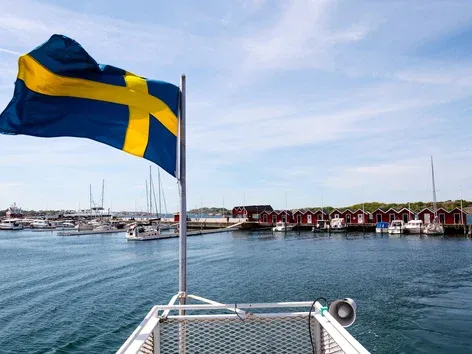
How to Obtain Swedish Citizenship in 2026: Requirements, Procedures, and Costs for Ukrainians
Sweden is one of Europe’s most developed countries and attracts thousands of Ukrainians with opportunities for work, education, and a comfortable life. A Swedish passport grants free movement within the EU and visa-free entry to 177 countries worldwide. Learn more about how to obtain Swedish citizenship, the requirements for applicants, the cost of the procedure, and the step-by-step application process in 2026
06 Apr. 2026
More detailsAll materials and articles are owned by VisitWorld.Today and are protected by international intellectual property regulations. When using materials, approval from VisitWorld.Today is required.